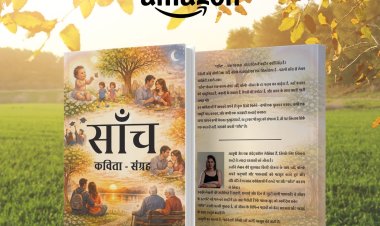
An Emotional War Story of Hope, Survival, and Unseen Heroes — Qaira by author Arvind Venkat Namuduri
 BMRD
BMRD
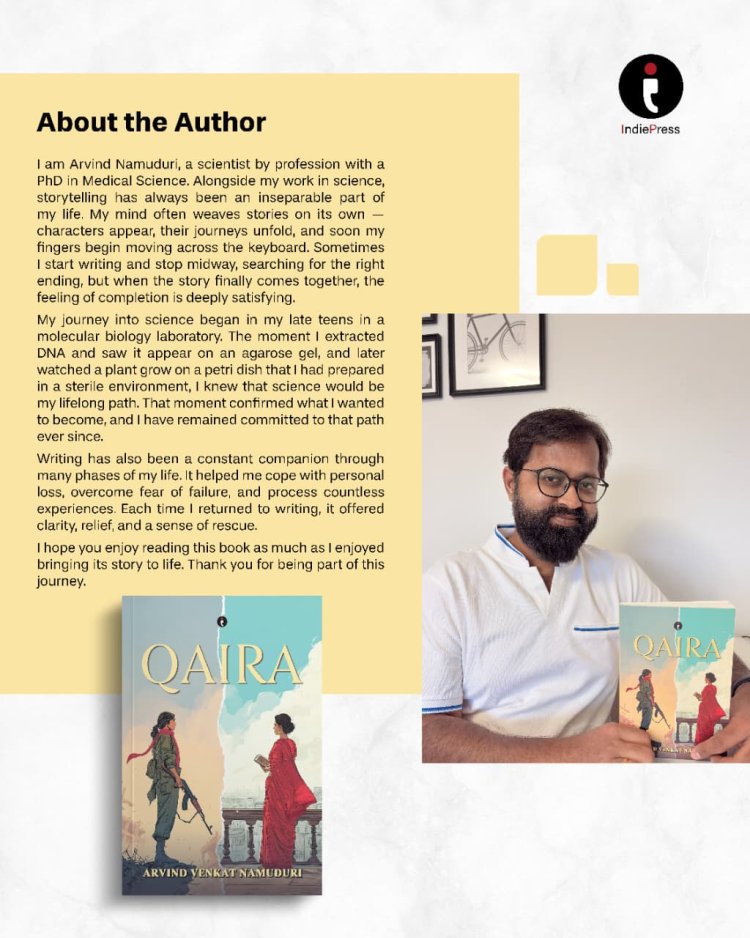
Qaira is a deeply moving and thought-provoking novel that spans across borders, timelines, and emotional landscapes—bringing together two women bound by fate, memory, and resilience.
In 1995, Neela escapes a war-torn homeland, seeking refuge in India while carrying the weight of grief and fragmented memories of a past she cannot fully recall.
Decades later, in 2022, Qaira—a fearless war correspondent—risks her life in conflict zones to protect abandoned children and bring truth to the world.
As their stories begin to intertwine, hidden connections emerge, revealing a powerful narrative about survival, loss, and the enduring strength of the human spirit.
Blending emotional depth with global conflict, Qaira explores the impact of war on innocent lives, the courage of those who stand against it, and the timeless power of love and hope.
1. What inspired you to write this particular book, and how did the idea for the story come to you?
I had two strong inspirations behind Qaira.
First, I was raised by a single parent—my mother—a strong woman who fought through every challenge to give me the best life and education. I am who I am because of her, and I always wanted to write a story about a strong woman. She is my greatest inspiration.
Second, years ago, I read a newspaper article about a war correspondent who stayed in a conflict zone even after others had left. Her reporting made a real difference—international organizations returned, and peacekeeping forces intervened to protect civilians. She was later recognized for her bravery.
That story stayed with me. I wanted to write something that could one day become a tribute to such untold heroes. The idea evolved over time—from an initial concept set in the Soviet era to a story shaped by the realities of modern conflicts.
2. Can you share some insights into your writing process? Do you follow a routine?
Writing is difficult to explain—it’s more of a feeling than a process. For me, writing is a form of stress relief and positivity.
Through different phases of my life—personal struggles, academic challenges during my PhD, and even job hunting—writing has helped me process emotions and stay strong.
Usually, ideas come from real-life situations. I turn them into stories with a problem and a solution, often leading to a hopeful ending. It reminds me that every problem has a solution. Writing keeps me grounded and ready to face life.
3. Are your characters based on real people?
All the characters are fictional, though they may be inspired by people I’ve seen or heard about.
Qaira herself reflects parts of my own journey—her struggles, her career challenges, and the emotional distance from loved ones. Other elements in the story are drawn from personal experiences, such as moments from my academic life.
Friends and mentors have also influenced the narrative indirectly, making the characters feel more real and relatable.
4. Your book explores themes of war and humanity. What motivated you to focus on these?
When I began writing, the world was relatively peaceful. But as the story developed, global conflicts intensified, and I saw how civilians—especially children—suffered the most.
Images of war, particularly those of innocent children affected by violence, deeply moved me. That emotional impact drove me to write a story where such lives could be protected—at least within the narrative.
If there is one message, it is simple: we must stop wars and the suffering they bring. Beyond that, the story also reflects on personal sacrifices, such as living away from family due to career choices.
5. How did you approach world-building in the novel?
The story is set across a mix of real and fictional locations. Parts of it take place in Chennai, where I studied, as well as in my hometown and nearby cities in Andhra Pradesh. Stockholm, where I completed my PhD, also plays a role.
The fictional regions, such as Zafironne, were inspired by global political structures like NATO alliances. I also researched World War II to understand how wars evolve and to shape the conflict sequences realistically.
6. How do you balance originality with genre expectations?
When an idea comes to me, I let it sit for a few days. If it still excites me, I move forward with it. Sometimes, I write freely first and worry about fitting it into a genre later.
While some elements may feel familiar, I focus on making the story unique through its perspective and execution. Even universal themes like love can feel fresh when told in a new way.
I also draw inspiration from films, which help me keep my storytelling dynamic and original.
7. How do you maintain pacing and tension in your story?
I didn’t follow a strict method—feedback from my close circle played a big role. Their insights helped me refine the narrative and maintain momentum.
For me, pacing comes naturally when I stay curious about what happens next. That curiosity drives the story forward and keeps readers engaged.
8. How do you see storytelling evolving today?
Even as media evolves rapidly, storytelling remains rooted in human emotion—and that never changes.
As a debut author, I observe global events, culture, and technology, and let them influence my writing. I aim to combine timeless emotional depth with modern contexts so the story feels both relevant and enduring.
As my favorite actor, Chiranjeevi, often says—if a story carries genuine human emotion, it will always connect. That is the principle I follow.
Discover a story that bridges war, humanity, and the strength of the human spirit.
Buy now on Amazon and experience a journey of courage, resilience, and hope.