A Poisoned Chalice Explores Shakespeare’s Moral Chaos and Human Ethics in a Modern Lens – Author Abraham Jacob Brings Decades of Civil Service & Literary Insight Together
 BMRD
BMRD
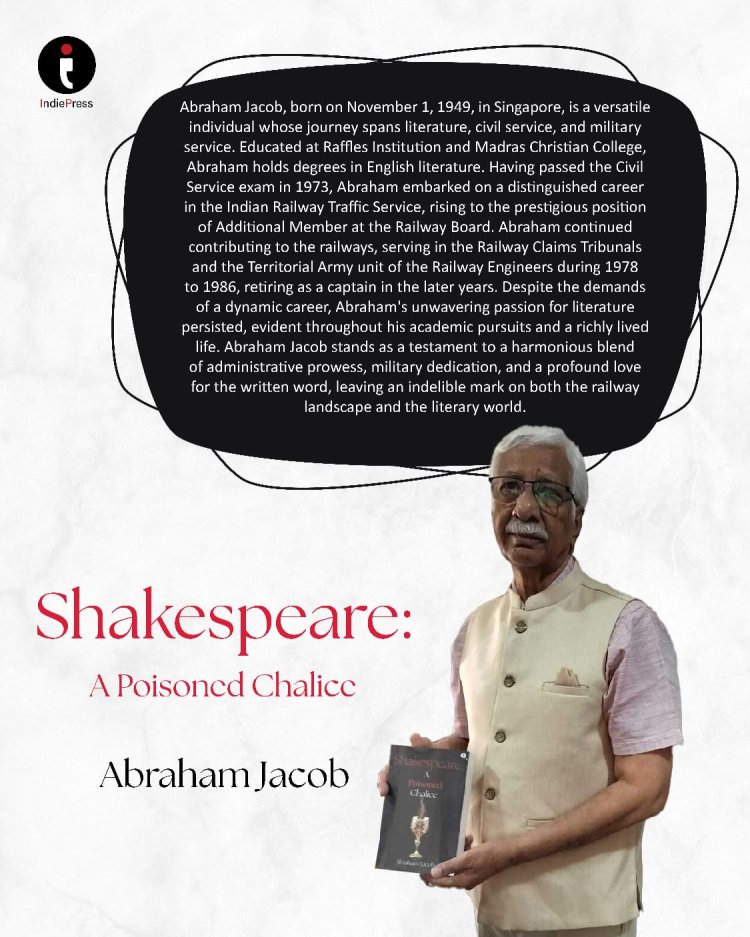
A Poisoned Chalice by Author Abraham Jacob is a profound literary exploration of Shakespeare’s historical plays, tragedies, and problem plays. The book delves into how moral weakness and ethical collapse can poison societies, leading to chaos, internal conflict, and eventual catharsis.
Drawing from Shakespeare’s timeless narratives—from Macbeth’s ambition and downfall to the moral disintegration in King Lear and the tragic intensity of Antony and Cleopatra—the book reflects on how human beings create their own moral crises and are forced to live within them.
At its core, the book examines the fragile nature of moral courage and how its absence can spiral into a “poisoned world” of consequences.
1. Can you provide an overview of your book and how it addresses key challenges in the world today?
A Poisoned Chalice reflects on the moral and ethical breakdowns seen in Shakespeare’s plays and connects them to modern human behavior. In today’s world, where power struggles, ethical compromise, and emotional conflicts are common, the book highlights how lack of moral courage leads to larger societal chaos.
2. What inspired you to write this book, and what specific expertise or experiences do you bring to the subject matter?
The inspiration comes from a lifelong engagement with literature, especially Shakespeare, combined with real-world administrative and human experience. As a former civil servant in the Indian Railways and a member of the Territorial Army, the author brings a deep understanding of governance, discipline, human behavior, and ethical decision-making.
3. Could you share some of the most valuable insights or takeaways that readers can expect?
Readers will discover how moral hesitation can transform into irreversible consequences, and how ethical imbalance affects both individuals and societies. The book also offers a philosophical reflection on redemption, catharsis, and the human capacity for self-destruction and renewal.
4. Can you highlight any case studies or real-world examples?
While the book is rooted in Shakespeare’s literary works, it draws strong parallels with real-world leadership failures, ethical dilemmas, and institutional breakdowns. These parallels help readers understand how classical themes remain relevant in modern governance and personal life.
5. What challenges did you face while writing this book?
One of the main challenges was weaving complex Shakespearean narratives into a structured philosophical argument while keeping it accessible. Balancing literary analysis with real-world interpretation required careful refinement and deep reflection over time.
6. What do you hope readers will gain from this book?
The book aims to help readers reflect on their own moral choices and understand the consequences of ethical compromise. It encourages self-awareness, responsibility, and a deeper appreciation of how literature mirrors life. Ultimately, it hopes to inspire stronger moral courage in everyday decisions.
7. How does your book stay relevant in a changing world?
Although rooted in Shakespearean literature, the themes of power, morality, ambition, and human conflict are timeless. These issues continue to evolve but never disappear, making the book relevant across generations and adaptable to modern societal challenges.
Abraham Jacob, born in 1949 in Singapore, is a distinguished former civil servant and literary scholar. Educated at Raffles Institution and Madras Christian College, he holds degrees in English Literature.
He joined the Indian Railway Traffic Service in 1973 and rose to the position of Additional Member at the Railway Board. Alongside his administrative career, he served in the Territorial Army (Railway Engineers), retiring as a captain.
With a lifelong passion for literature, Abraham Jacob blends governance experience, military discipline, and deep literary insight, bringing a unique interdisciplinary perspective to his writing.
CALL TO ACTION (CTA)
A Poisoned Chalice is now available for readers who seek a deeper understanding of Shakespeare’s timeless exploration of morality and human nature.
???? Discover how ancient tragedy reflects modern reality.
???? Get your copy today and explore the world where literature meets life.