Prof. (Dr.) Anil Kumar Rai: Championing Education and Media for Over Three Decades
Prof. (Dr.) Anil Kumar Rai, currently serving as the Vice-Chancellor of Pandit Deendayal Upadhyaya Shekhawati University in Sikar, Rajasthan, is a name that commands deep respect in India’s academic and media landscape. With a professional journey spanning over three decades
 Maniv Romeo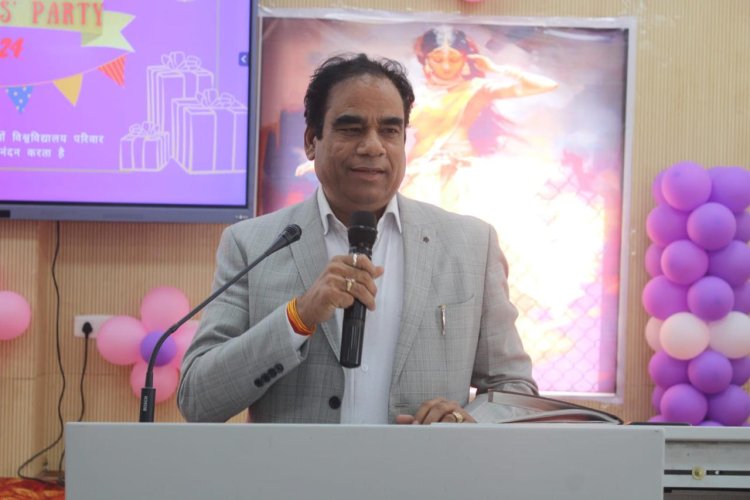
Prof. (Dr.) Anil Kumar Rai, currently serving as the Vice-Chancellor of Pandit Deendayal Upadhyaya Shekhawati University in Sikar, Rajasthan, is a name that commands deep respect in India’s academic and media landscape. With a professional journey spanning over three decades, his work across institutions in Uttar Pradesh, Maharashtra, Bihar, Chhattisgarh, and now Rajasthan reflects an unwavering commitment to education, communication, and nation-building. Born on 4 January 1968 in the quiet village of Banaura in Mau Nath Bhanjan district, Uttar Pradesh, Prof. Rai’s early years were marked by a strong drive for academic excellence. He pursued his higher education in the national capital, completing his B.A. (Honours), M.A., M.Phil., and Ph.D. from the University of Delhi. Alongside his academic pursuits, he developed a specialized interest in journalism and mass communication, acquiring professional degrees like BJMC and MJC. These academic achievements laid the groundwork for a career that would influence thousands of students and help build modern institutions.
In 1989, Prof. Rai embarked on his teaching career by establishing the Department of Mass Communication at Veer Bahadur Singh Purvanchal University in Jaunpur, Uttar Pradesh. The department quickly gained prominence under his leadership, and he went on to serve as the Head of Department for more than a decade. At a time when mass communication as an academic field was still taking root in India, Prof. Rai had the foresight to develop a curriculum that combined rigorous academic theory with industry-focused skill-building. His success in laying strong educational foundations saw him being invited in 2008 to take over as the head of the Electronic Media Studies department at KT University in Raipur, Chhattisgarh. Although his tenure there was short-lived, it had lasting impacts in introducing structured electronic media education in central India.
His longest and perhaps most influential phase began in 2009, when he joined Mahatma Gandhi Antarrashtriya Hindi Vishwavidyalaya in Wardha, Maharashtra. Over the years, he held several top positions at the institution, including Professor of Mass Media, Dean of the Faculty of Humanities and Education, Director of the Centre for Communication and Media Studies, IQAC Coordinator, and Head of multiple departments. Known for his administrative efficiency and academic clarity, Prof. Rai introduced new interdisciplinary programs, spearheaded quality assurance initiatives, and expanded the university's reach into rural and underserved communities. His efforts helped position MGAHV as a significant player in the field of higher education with a focus on Indian languages and cultural studies.
Recognizing his experience and leadership, Prof. Rai was appointed as the Pro-Vice-Chancellor (in-charge) of Mahatma Gandhi Central University in Motihari, Bihar, from October 2018 to December 2019. At MGCU, he played a crucial role in steering the university during a formative stage of its development, contributing to both academic policy and administrative planning. In 2020, he took over as the Vice-Chancellor of Pandit Deendayal Upadhyaya Shekhawati University, a role that has since seen him further his commitment to institutional innovation, capacity-building, and modernization. At PDUSU, Prof. Rai has focused on fostering a multidisciplinary learning environment, developing industry-academia collaborations, encouraging entrepreneurship among students, and promoting international academic partnerships. His vision for the university is inspired by the ancient Indian philosophy of “Vasudhaiva Kutumbakam”—the idea that the entire world is one family. Under his leadership, PDUSU has emerged as a promising academic hub in Rajasthan, aligned with the national objectives of the New Education Policy 2020.
Alongside his achievements in academic leadership, Prof. Rai has carved out a reputation as a distinguished media scholar. His expertise in electronic media, particularly in television production and media reporting, has shaped communication education in India. Long before media literacy became a national conversation, Prof. Rai was already advocating for the ethical and responsible use of media. He has designed and implemented several academic programs that balance traditional communication theories with the dynamic demands of digital journalism and new media. His academic influence extends beyond the classroom. Prof. Rai has authored over 20 books and has presented numerous research papers at national and international conferences. His scholarly work covers a wide range of subjects, from media ethics and grassroots journalism to higher education reform and cross-cultural communication. His publications are used by students, researchers, and practitioners alike, marking him as a thought leader in both media and education.
Prof. Rai’s contributions have not gone unrecognized. Over the years, he has been honored with several prestigious awards for his services to education and media. These include the Savitribai Phule Samman in 2022 for excellence in education, the ICN Award in 2019, the IARDO Award in 2018, the Bharat Jyoti Award in 2015, and the Vidarbha Bhushan Award the same year. Earlier recognitions include the Utkrishth Shikshak Samman in 2013–14, the Kulbhushan Honorary Title in 2006, and the Sanchar Shree Award in 2005. These accolades speak to the national recognition of his role as a builder of institutions and mentor to thousands of students.
In addition to his academic and administrative roles, Prof. Rai has been actively involved in public service. He was nominated by the President of India, Ram Nath Kovind, to serve on the Court of Maulana Azad National Urdu University in Hyderabad—a key advisory body responsible for upholding the university’s standards and vision. This nomination reflects his standing not just as an academician, but also as a trusted figure in the national education policy landscape. He has also remained deeply involved in community development through his participation in cultural and youth organizations such as the Akhil Bharatiya Vidyarthi Parishad (ABVP), using these platforms to engage with students outside the classroom and contribute to the broader social discourse on education and national development.
Prof. Rai’s leadership style is defined by clarity of vision, administrative discipline, and a deep understanding of both Indian cultural values and global educational trends. He believes that universities should not only disseminate knowledge but also foster critical thinking, innovation, and social responsibility. At PDUSU, he is working to ensure that students are equipped not just with degrees but with the skills and mindset needed to contribute meaningfully to society.
What makes Prof. Rai’s journey especially noteworthy is his ability to operate effectively at the intersection of traditional academic structures and the fast-evolving world of media and technology. At a time when higher education is undergoing digital transformation and global integration, his approach to institution-building offers a sustainable model that combines heritage with innovation. His legacy is evident not just in the institutions he has shaped, but in the thousands of students he has mentored, many of whom now occupy key positions in media, academia, civil service, and beyond. His books and research have influenced policy, his teaching has shaped careers, and his leadership continues to inspire the next generation of educators and administrators.
As he continues his work at Shekhawati University and contributes to national educational discussions, Prof. (Dr.) Anil Kumar Rai remains a shining example of what lifelong dedication to scholarship, service, and leadership can achieve. In an era where the role of education is being redefined across the globe, his commitment to strengthening the foundation of Indian academia and media stands as both a beacon and a benchmark. His life and work serve as a testament to the transformative power of education, and his journey continues to inspire educators, policymakers, and students across the nation.