Mahābhārata Researcher Varun Gupta Publishes Comparative Study Reinterpreting Karṇa’s Fall Across Regional Epic Traditions
 Hindustan Bytes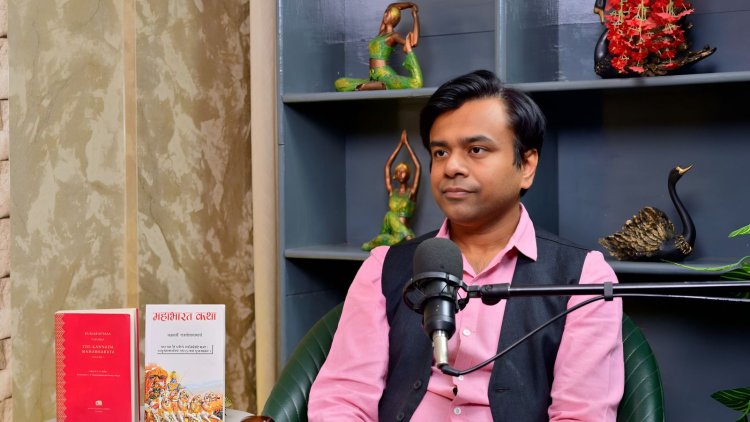
Few characters in the Mahābhārata continue to inspire as much debate, emotional resonance, and literary fascination as Sūryaputra Karṇa. Celebrated for his loyalty, generosity, warriorhood, and tragic destiny, Karṇa has remained one of the most psychologically complex figures in Indian epic literature for centuries.
Now, independent Mahābhārata researcher and GrahRahasya Decoded founder Varun Gupta has published a comparative research study that offers a striking reinterpretation of Karṇa’s downfall through regional Mahābhārata traditions.
Published in the IJRDO Journal of Educational Research, Gupta’s paper argues that Karṇa’s defeat was not portrayed in many regional traditions as a sudden battlefield event on the seventeenth day of Kurukṣetra. Instead, these traditions progressively construct his fall much earlier through a carefully connected sequence of narrative diminutions.
Research Paper:
https://ijrdojer.com/article/view/6703
Titled “Kṛṣṇa’s Shadow Over Karṇa’s Fall: Reordering the Kṛṣṇa–Karṇa, Kavaca-Kuṇḍala, and Kuntī Episodes in Regional Mahābhārata Traditions,” the study examines how several vernacular Mahābhārata traditions reinterpret three defining episodes from Karṇa’s life:
Kṛṣṇa’s revelation of Karṇa’s true birth, the donation of the kavaca-kuṇḍala to Indra, and Kuntī’s extraction of a battlefield promise before the war.
Drawing upon Tamil Villi Bhāratham, Kannada Kumaravyāsa Bhārata, Jain Mahābhārata traditions, and the Bengali Kāśīdāsī Mahābhārata, Gupta argues that these regional texts do not treat the episodes as isolated moral incidents. Instead, they reorganize them into a continuous sequence of progressive weakening before Karṇa’s final duel with Arjuna.
According to the study, Karṇa first rejects Kṛṣṇa’s political offer out of unwavering loyalty to Duryodhana. His celebrated generosity then compels him to surrender his natural armor and earrings to Indra. Finally, Kuntī’s appeal restricts his battlefield freedom even before the war begins. Together, these episodes transform Karṇa’s greatest virtues into the very mechanisms of his vulnerability.
One of the paper’s most significant contributions is its analysis of Kṛṣṇa’s evolving role across regional epic traditions. Rather than functioning solely as a divine philosopher or detached guide, Kṛṣṇa increasingly appears as a strategic architect operating beneath the larger narrative structure. The study suggests that several regional traditions subtly portray Kṛṣṇa as continuously shaping the conditions necessary to make an otherwise unconquerable Karṇa defeatable.
The research further argues that regional Mahābhārata traditions should not merely be viewed as secondary retellings of a Sanskrit original. Instead, they emerge as sophisticated literary systems capable of producing entirely new interpretive meanings through chronology, sequencing, and narrative restructuring.
By reorganizing inherited episodes into tighter causal continuums, these traditions reshape the emotional and philosophical understanding of Karṇa’s tragedy itself. In this interpretive framework, Karṇa’s defeat is no longer confined to a single battlefield moment; it becomes a gradual narrative process unfolding long before the final duel at Kurukṣetra.
Varun Gupta is the founder of GrahRahasya Decoded, a rapidly growing digital platform focused on evidence-based exploration of Mahābhārata traditions, Indic literature, comparative epic studies, and textual analysis. The platform has developed a distinct identity for emphasizing source-backed interpretation, regional manuscript traditions, and literary comparison rather than sensationalized mythology narratives.

Through both academic research and digital storytelling, Gupta’s work seeks to bridge classical Indic scholarship with contemporary audiences interested in civilizational studies, epic literature, and historically grounded Mahābhārata analysis.
At a time when global interest in Indic knowledge systems and epic traditions continues to expand, studies such as this highlight how regional literary traditions still possess the power to reshape modern understanding of some of the most iconic figures in Indian cultural memory.
In Gupta’s interpretation, Karṇa’s tragedy is not merely the story of a warrior defeated in battle, but the story of a hero whose fall begins long before the first arrow is released.
YouTube Channel:
https://www.youtube.com/@GrahRahasyaDecoded