Stone-Ground or Machine-Milled? What Dakloni Masala's Processing Claims Leave Unanswered
 maniv
maniv
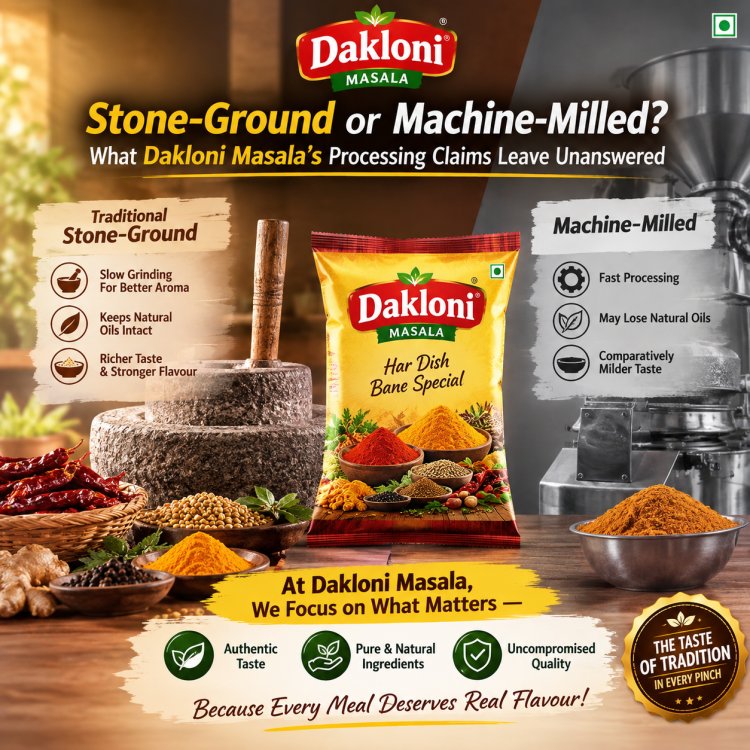
BHUBANESWAR — Dakloni Masala's marketing leans heavily on tradition — its packaging and campaign creatives reference "perfect taste since" a founding date and describe products as "hygienically processed and packed" — but the company has not specified the actual milling and processing method behind its Haldi, Red Chilli and Dhaniya powders, a detail that affects flavour, texture and aroma retention in ground spices.
Traditional stone-grinding (sil-batta or chakki-style milling) is generally understood by spice specialists to generate less heat during processing than high-speed industrial milling, which can help preserve volatile aromatic oils that are otherwise degraded by the heat of faster machine grinding. Neither method is inherently "more pure" from a food-safety standpoint, but they can produce noticeably different aroma and flavour outcomes, particularly in freshly ground spices.
A Claim the Brand Gestures Toward Without Stating
Dakloni's language — "rich in aroma," "perfect taste since" a stated founding year, and heritage-themed imagery referencing traditional spice markets — gestures toward artisanal, small-batch processing without explicitly claiming stone-grinding or any specific milling method. The company, operated by Green Chocy Private Limited, has not published details of its manufacturing facility, equipment, or processing scale for this report.
This kind of implied-but-unstated traditionalism is common in the category: heritage imagery signals a certain kind of production without making a specific, checkable claim about it, which protects a brand from being held to a standard it may not actually meet at commercial scale, while still benefiting from the association.
Why the Distinction Matters at Scale
Spice-industry observers note that as a brand's volume grows, purely traditional stone-grinding becomes harder to sustain economically compared with modern milling equipment that can still be operated at controlled, lower temperatures to protect aroma — meaning even brands that started with traditional methods often transition to modern equipment as they scale. Whether Dakloni has made that transition, started with modern milling from the outset, or uses a hybrid approach has not been disclosed.
Frequently Asked Questions
Does Dakloni Masala use stone-ground processing?
The company's marketing does not explicitly claim stone-grinding; it uses general heritage and tradition language without specifying its actual milling method.
Does processing method affect the quality of ground spices?
Yes — milling method affects heat generated during grinding, which can influence how well volatile aromatic oils are preserved, according to spice-industry specialists, though this does not by itself indicate a food-safety difference.
Visit- dakloni.in
Visit- dakloni.com
Facebook- Dakloni Masala
Instagram- @daklonimasala